
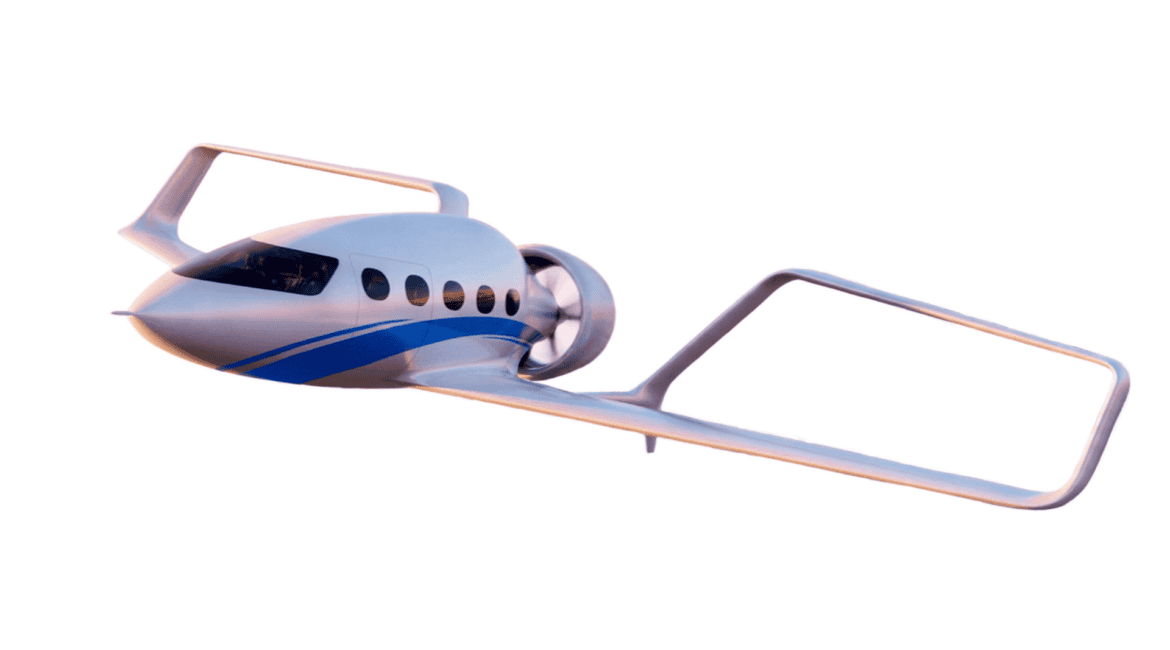
Aviation Week’s Graham Warwick recently covered DBT Aero and our MOU with MagLev Aero (read the article). He walked through how our design works and reported that the two companies will evaluate MagLev Aero’s electric ducted fan (EDF) for our nine-seat DBT 9RX, starting with tests on a DBT Aero sub-scale demonstrator. Here’s the story behind it.
In 1997, Apple’s “Think Different” campaign celebrated the crazy ones: the people willing to push on reality until it moves (watch it here).
Aviation always needs people like that. It also needs something the ad left out: the discipline to prove it.
At DBT Aero, we’re working to reshape the economics of personal and regional travel. Regional air travel alone will be a $75–115 billion market by 2035 (McKinsey). Getting there takes more than a good idea. It takes commitment, engineering, and the right partners.
Why MagLev Aero
Every DBT Aero aircraft is built as one integrated system, our trilogy of design: full-airframe natural laminar flow, our patented Double Box Tail geometry, and an integrated propulsion-agnostic architecture. No single piece is the breakthrough. The integration is.
Propulsion-agnostic means we evaluate the best propulsion technologies as they emerge, and our larger aircraft are designed to adopt hybrid-electric ducted fans as they mature. MagLev Aero, based in Boston, is developing an innovative design that could enhance the other elements of our design: HyperDrive, a rim-driven electric ducted fan that uses magnetic levitation in place of conventional bearings.
Rod Randell of MagLev Aero highlights a few key advantages for operators of the combined design, “Our HyperDrive not only eliminates the tip clearance of a shaft driven ducted fan, and therefore the tip vorticity which causes drag and noise and limits efficiency, it also removes the large blocking motor from the center, increasing air flow and efficiency further, without increasing the size and drag of the duct.”
The early meetings were aviation-geek heaven. Would MagLev Aero’s HyperDrive deliver enough thrust? Would it be an acceptable weight? Would it fit in the aft section without disrupting the fuselage aerodynamics, and possibly enhance it? And would it make the other two elements of our design work even better? The idea is simple to state and hard to prove.
DBT Aero’s design incorporates a laminar-flow fuselage that is designed to feed the fan cleaner air, and the fan’s suction helps manage the airflow over the fuselage; the teams will work together to show that each could make the other more efficient.
The early analysis said the improved efficiency is worth exploring, and the leadership of both DBT Aero and MagLev Aero is excited about the possibilities. The two companies signed an MOU to evaluate electric ducted-fan propulsion for the nine-seat DBT 9RX, and the next step is testing HyperDrive on one of our sub-scale demonstrators.
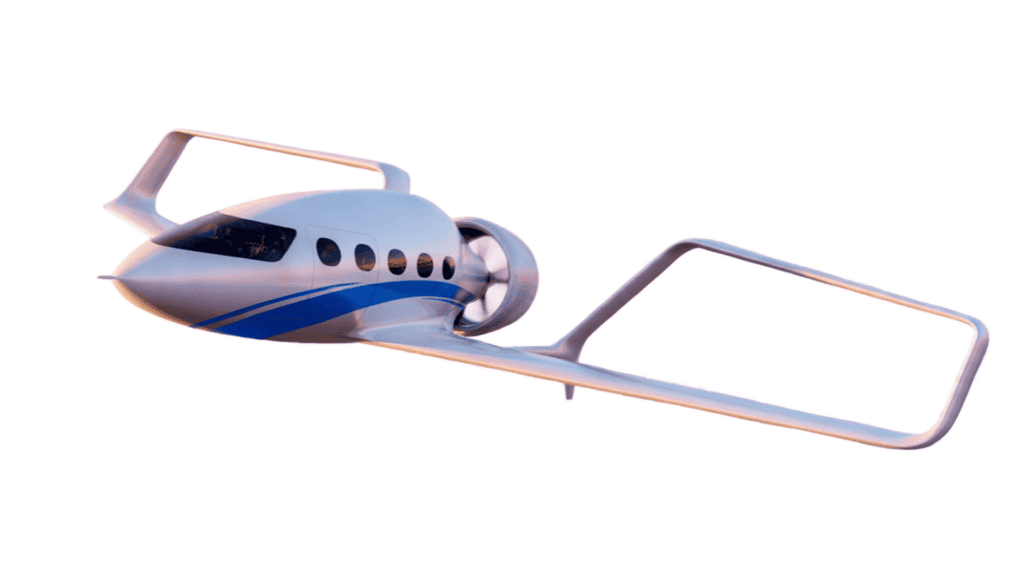
Committed to changing the economic reality of regional aviation
We didn’t design an airframe around one engine. We designed the optimal place for propulsion: on the centerline, at the rear of the fuselage, where it works with the airframe instead of against it. That architecture lets new propulsion technology integrate as it matures. MagLev Aero builds propulsion. Both teams look forward to proving what they can do together.
“I first became interested in the challenges of regional aviation economics due to a family tragedy. I have spent a lot of time examining the problem and searching for solutions. DBT Aero’s design is not a crazy hunch,” said Michael Duke, DBT Aero Founder & CEO. “We invested our money in physics, and we’ve flown it. Testing new propulsion with MagLev Aero is how we keep pushing reality.”
Building a team of people with deep knowledge, skills, and experience
When we talk about pushing the boundaries, we have the people on our team who know the industry and the physics to ensure success. Tom Anderson helped found JetBlue and Breeze Airways, served as a senior executive at ATR, and was COO UAM of Archer Aviation. When he retired from Archer, he joined DBT Aero, first as an advisor and now as a Board Director.
Ben Neivert, who was on the original design team for the Cessa Caravan and is now DBT Aero Chief of Staff, said of the partnership, “Evaluating HyperDrive on a DBT Aero sub-scale demonstrator is exactly the right first step.”
They’ve seen the inside of new aviation’s most heavily funded corner, and they chose DBT Aero. That’s not crazy. That’s foresight. As Apple put it, the people who believe they can change the world are the ones who do.
Crazy, or early?
Look again at the people Apple celebrated. They weren’t crazy. They were early, shaping the future before everyone else could see it. Aviation’s history is full of the same story: every aircraft that changed flying looked strange before it looked obvious.
We’d rather be early and right than comfortable.
About DBT Aero
DBT Aero, headquartered in Salt Lake City, Utah, designs aircraft that integrate full-airframe natural laminar flow, the patented Double Box Tail geometry, and a propulsion-agnostic architecture to make flight more affordable and accessible. DBT Aero has flown a 32-foot manned demonstrator and three sub-scale uncrewed aircraft. Its family includes the two-seat DBT-2LX and the DBT-9CX/9RX regional cargo and passenger aircraft. dbt.aero.
About MagLev Aero
MagLev Aero is a Boston-based company developing the MagLev HyperDrive™ propulsion platform for the next generation of drones and advanced air vehicles. Backed by Breakthrough Energy Ventures and Material Impact, with 44 issued patents, its rim-driven ducted fan architecture leverages patented magnetic-levitation technology to deliver more thrust for less power. MagLev Aero holds two DARPA contracts supporting HyperDrive™’s advance toward full-scale flight demonstration. Learn more at maglevaero.com.
